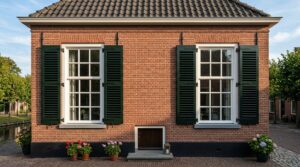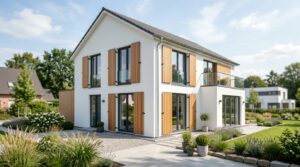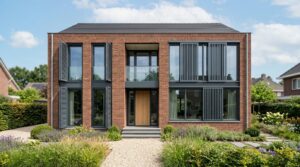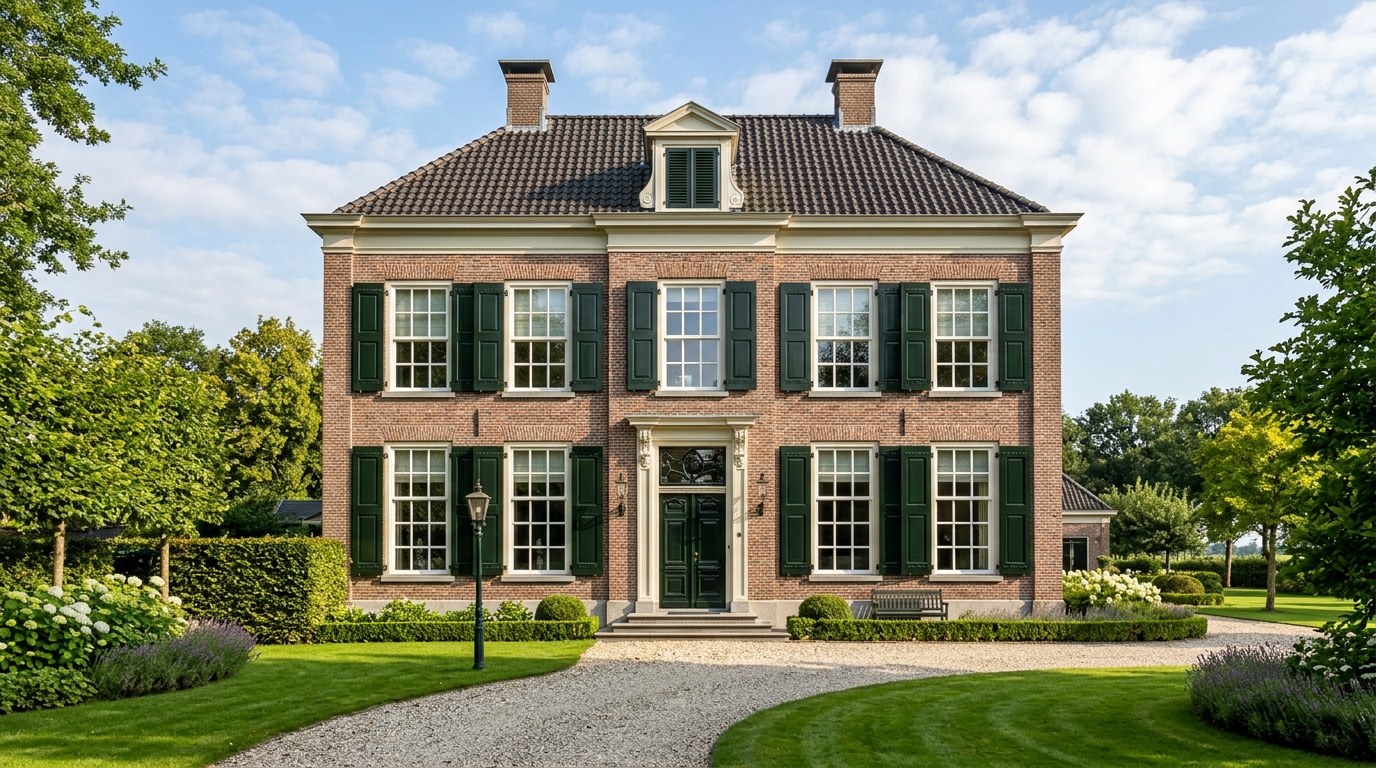
Classic shutters instantly lend a townhouse, solicitor’s residence, vicarage or 1930s villa the stately appearance and sense of depth associated with historic and classic-modern architecture. Whilst a clamped shutter derives its robust character from vertical slats with cross-braces, classic shutters and panelled shutters are all about refined joinery: a substantial frame of stiles and rails incorporating a recessed or raised bossed panel and carefully milled profiled edges. At Shutters Inc., we manufacture classic shutters to the nearest millimetre in our own factory in Haaksbergen.
What makes a panel shutter a truly classic shutter?
Not every panel shutter looks the same on a façade. The secret of an authentic classic shutter lies in the play of shadows created as sunlight falls across the shutter. This play of shadows is determined by three traditional craftsmanship details:
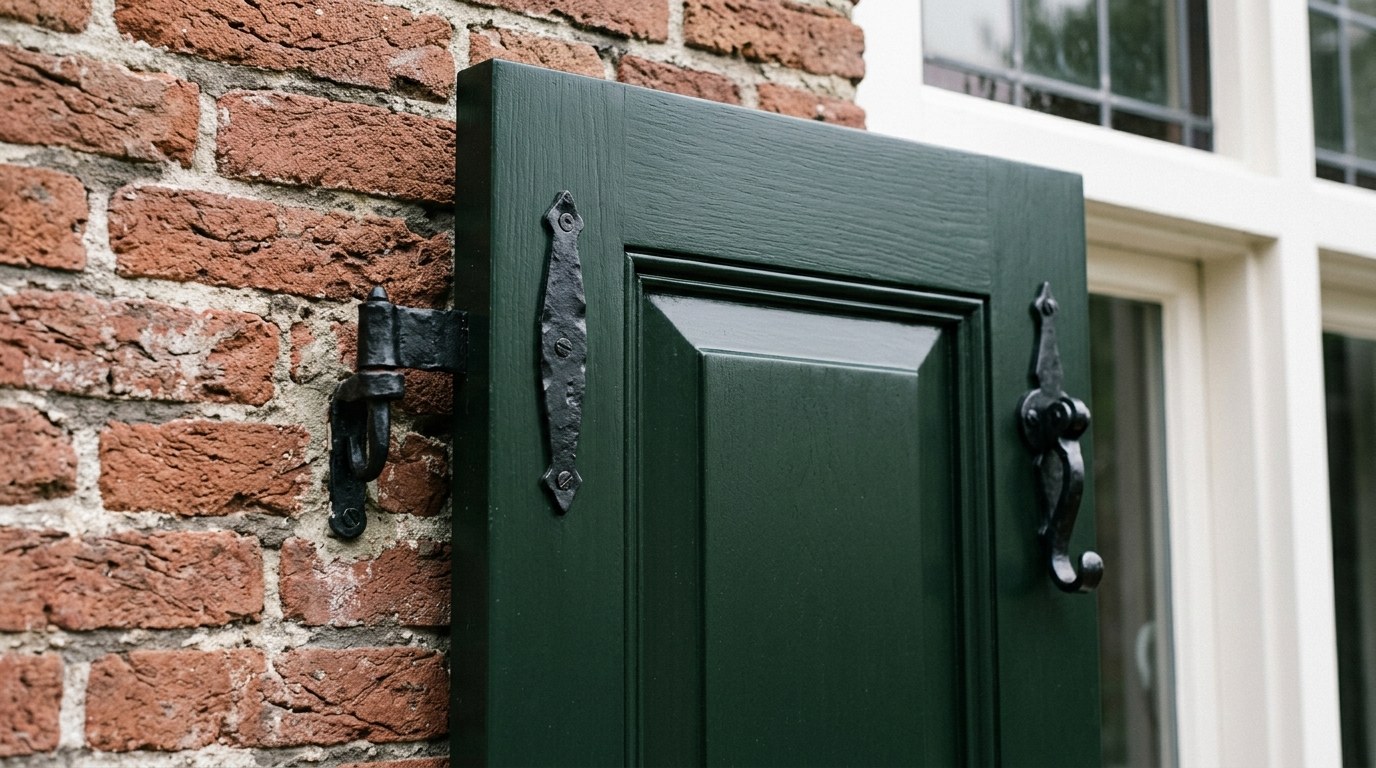
- The bossed panel (cushion panel): instead of a flat panel, we fill the frame with a solid panel whose edges are bevelled or flattened with a classic concave-convex profile (the bossing). As a result, the central surface sits higher within the frame, forming a distinctive cushion-like shape.
- Moulded stiles and rails: we can fit the inner edge of the frame (where the stile meets the panel) with a classic pigeon-chase profile, a beaded profile or a moulded glazing bead/decorative moulding, as required.
- Alignment of the crossbar with the window frame: for tall windows, we divide the classic shutter with a horizontal crossbar into two or three sections. When taking measurements, we ensure that this crossbar is positioned at exactly the same height as the sill or the lintel of your window.
Which panel design suits your home?
Depending on when your house was built — whether it’s a 19th-century property, a 1930s bay-windowed house or a newly built solicitor’s house — you can choose from four classic panel designs:
| Design | Features of the panel | Suitable for your home’s style |
|---|---|---|
| Single bossed panel (half shutter) | A single vertical cushion panel covering the lower half of the window; the transom remains unobstructed | Front sections of farmhouses, vicarages and properties with tall six-pane sash windows |
| Double-panelled shutters (1/3 – 2/3 or 1/2 – 1/2) | Two bossed panels one above the other, separated by a mullion at the level of the window sill | Mansion houses, notaries’ residences, classic country houses and town villas |
| Flat recessed panel with bevelled edge | A sleeker frame with a recessed flat panel without a cushion rise | 1930s homes, modern vicarages and timeless family homes |
| Classic combination shutter | A solid bossed panel at the bottom to prevent people looking in, with classic louvre slats at the top | Bedrooms and living rooms on the ground floor where privacy and filtered daylight are desired |
Are you looking for inspiration for specific types of homes? Then take a look at our overview of houses with shutters by architectural style, or read about what we take into account when fitting shutters for listed buildings and conservation areas.
Classic shutters in wood, aluminium or uPVC
Although classic framed shutters are traditionally made from solid hardwood, at Shutters Inc. you can also have the same classic panel layout crafted from maintenance-free aluminium or uPVC:
- Classic wooden shutters (Meranti): constructed using traditional mortise and tenon joints and deeply milled bossed panels. Finished in our own paint shop using a multi-layer paint system in any RAL colour or heritage colour of your choice.
- Aluminium panel shutters: constructed from profiled aluminium frames with inlaid decorative mouldings and cushion panels, finished with a scratch-resistant powder coating. Lightweight and 100% dimensionally stable.
- Upvc panel shutters: UV-resistant, colourfast panel shutters with a subtle wood-grain texture that you’ll never need to paint — particularly practical for hard-to-reach windows on the first and second floors.
Matching shutter fittings for classic framed shutters
With a classic panel shutter, the shutter fittings must not intersect the milled bossed panel. That is why we fit the hinges precisely onto the horizontal bottom and top rails of the shutter frame, or use narrow corner and hinge brackets on the stiles. Depending on whether you opt for functional or decorative shutters, we finish the whole unit with plate or mortise thumb turn handles, storm-proof shutter locks and a neat centre or espagnolette lock.
Frequently asked questions
What is the difference between a classic shutter and a standard panel shutter?
Both are framed shutters with stiles, rails and a panel infill. In a standard panel shutter, the frame and panel are often sleek and flat in design. A classic shutter is distinguished by its rich, historic mouldings: a thickened bossed panel (cushion panel with a sloping or curved bossed edge) and moulded stile and rail edges, such as a pigeon-chase, beaded or ogee profile.
When should you opt for half-height classic shutters rather than full-height shutters?
In the case of tall sash windows with a transom window (as found in 19th-century townhouses, vicarages and farmhouse front sections), classic shutters often only extend as far as the sill or the mullion. This allows you to close off the lower half of the window in the evening to prevent people looking in and to keep out the cold, whilst daylight still enters through the transom window.
How many panels are stacked one above the other in a classic shutter?
That depends on the height of the window and the layout of the window frame. Half-height shutters usually have a single vertical bossed panel. Full-height shutters have two or three panels stacked one above the other, with the intermediate rail aligning exactly with the window’s mullion or transom.
Can classic shutters with a bossed panel also be made from aluminium or uPVC?
Yes. As well as handcrafted solid Meranti hardwood, we also supply aluminium and UPVC panel shutters with a classic bossed or cushion-panel look. This allows you to combine the stately profile of a townhouse with a low-maintenance finish.
Which shutter fittings are best suited to classic panel shutters?
Classic framed shutters with moulded stiles often feature slender hinges with a decorative head or hinge brackets that do not cover the moulding of the panel, complemented by classic shutter fasteners (such as the ‘shepherdess’ latch) and a latch or espagnolette on the inside.
Which colours are most popular for classic shutters?
Heritage Green (RAL 6009), Canal Green, Gelderland Blue, Anthracite Grey (RAL 7016), deep black (RAL 9005) and oxblood red (RAL 3009) are the most popular colours for townhouses, notaries’ residences and 1930s villas.
Would you like to have classic panel shutters with a bossed panel made to measure for your home? Request advice and a quote with no obligation — we’ll usually get back to you within 24 hours. Request a quote
In brief — Classic shutters | Shutters Inc.
- Appearance: framed structure of stiles and rails with a reinforced bossed panel (cushion panel) and classic profiled edges
- Bespoke configurations: as half-shutters, double or triple-panel shutters, precisely aligned with the stiles of your window frame
- Materials: handcrafted from durable hardwood (classic wooden shutters), or maintenance-free aluminium and uPVC
- Fittings & colour: spray-painted or coated in any RAL or heritage colour, complete with stainless steel/wrought iron shutter fittings
- Shutters Inc.: free on-site measurements, in-house production in Haaksbergen and professional installation throughout the Netherlands