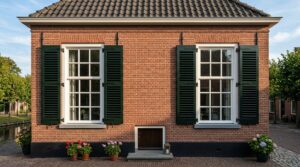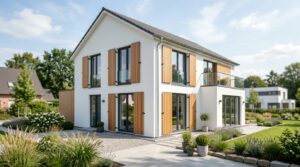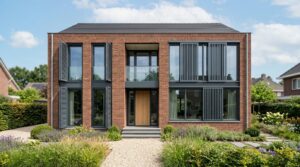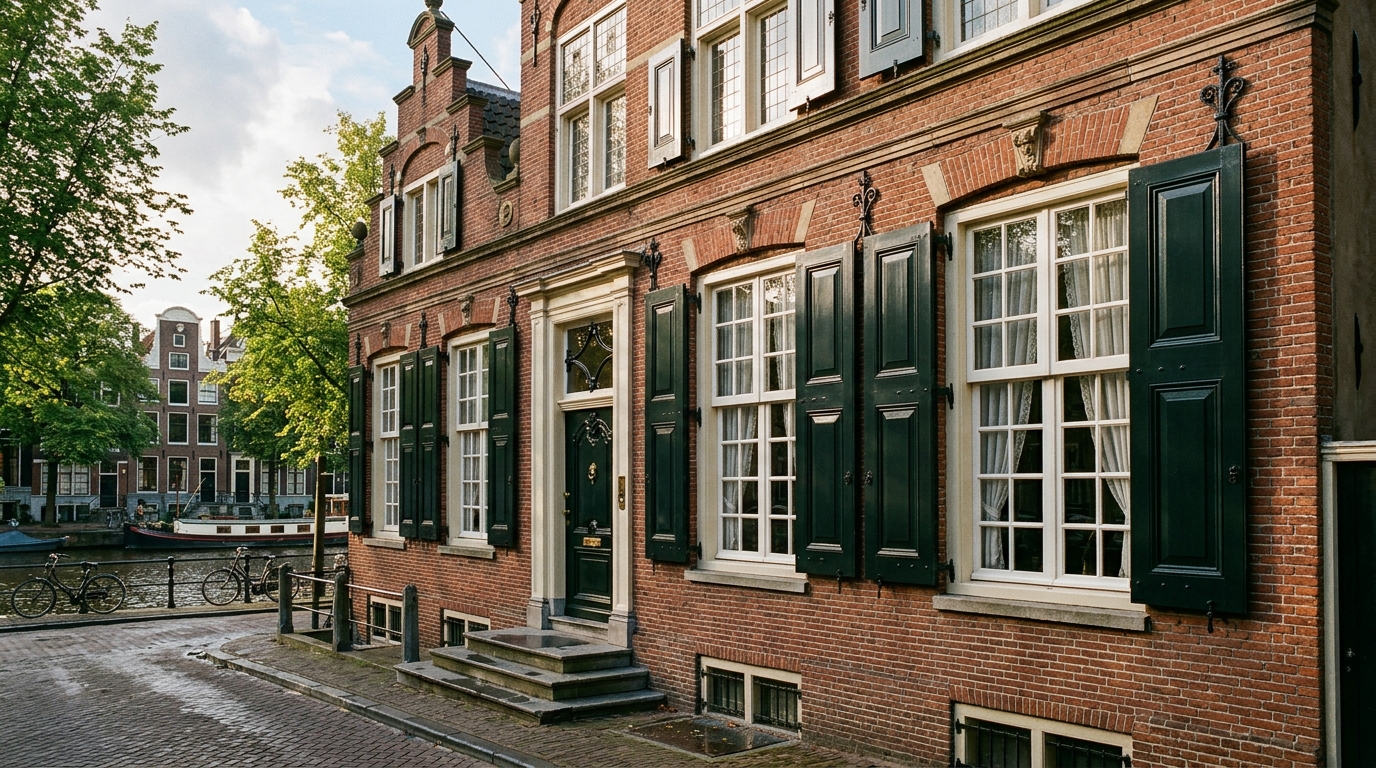
Outdoor panel shutters are fully enclosed window shutters with a sturdy surrounding frame and one or more enclosed panels. Whilst louvre shutters filter light and air, you should opt for panel shutters when complete blackout, maximum thermal insulation, storm protection and a calm, characterful façade are your priorities. Whether your home is a historic townhouse, a rural vicarage or a sleek, modern villa — with bespoke wooden, aluminium or UPVC panel shutters, you can tailor the profile, colour and fittings precisely to the architecture of your façade.
The 4 main advantages of closed panel shutters
- 100% light blockout & privacy: As there are no slat openings in the shutters, functional panel shutters seal off bedrooms and street-facing windows almost completely — ideal for areas with streetlights or early summer sun.
- Noticeable insulation in both winter and summer: When closed, a layer of still air forms between the glass and the solid panel. This reduces heat loss on cold winter nights and keeps out the scorching heat on summer afternoons (see also shutters as insulation and sun protection).
- Extra protection against the weather and burglary: Solid, closed panels, combined with sturdy shutter locks, form a robust physical barrier against driving rain, hail and unauthorised entry.
- A calm and versatile façade: from richly moulded classic panelled shutters to minimalist smooth panels without mouldings — panelled shutters suit virtually every type of Dutch home (see which shutters suit your home’s style).
What panel styles are available? From classic moulded panels to sleek, modern designs
The character of a panel shutter is 80 per cent determined by the way the inner panel is designed within the frame:
- Bossing Panel (classic / heritage): The panel slopes inwards at the edges towards a raised central section, creating subtle shadows in the sunlight. The standard choice for 19th-century townhouses, vicarages and shutters for listed buildings (see also classic shutters).
- Flat panel (modern / timeless): A completely sleek, flat panel in a slim frame—or even a completely frameless/flush design. Ideal for modern brick or rendered façades and sleek sliding shutters.
- Grooved or plank panels (rustic): Panels featuring vertical V-grooves or beaded sections for a rustic farmhouse look, as a refined alternative to traditional clamped shutters or farmhouse shutters.
- Combi shutters (half panel, half louvre): Would you like a solid or flat panel at the bottom and open slats at the top? Then combi shutters offer the best of both worlds.
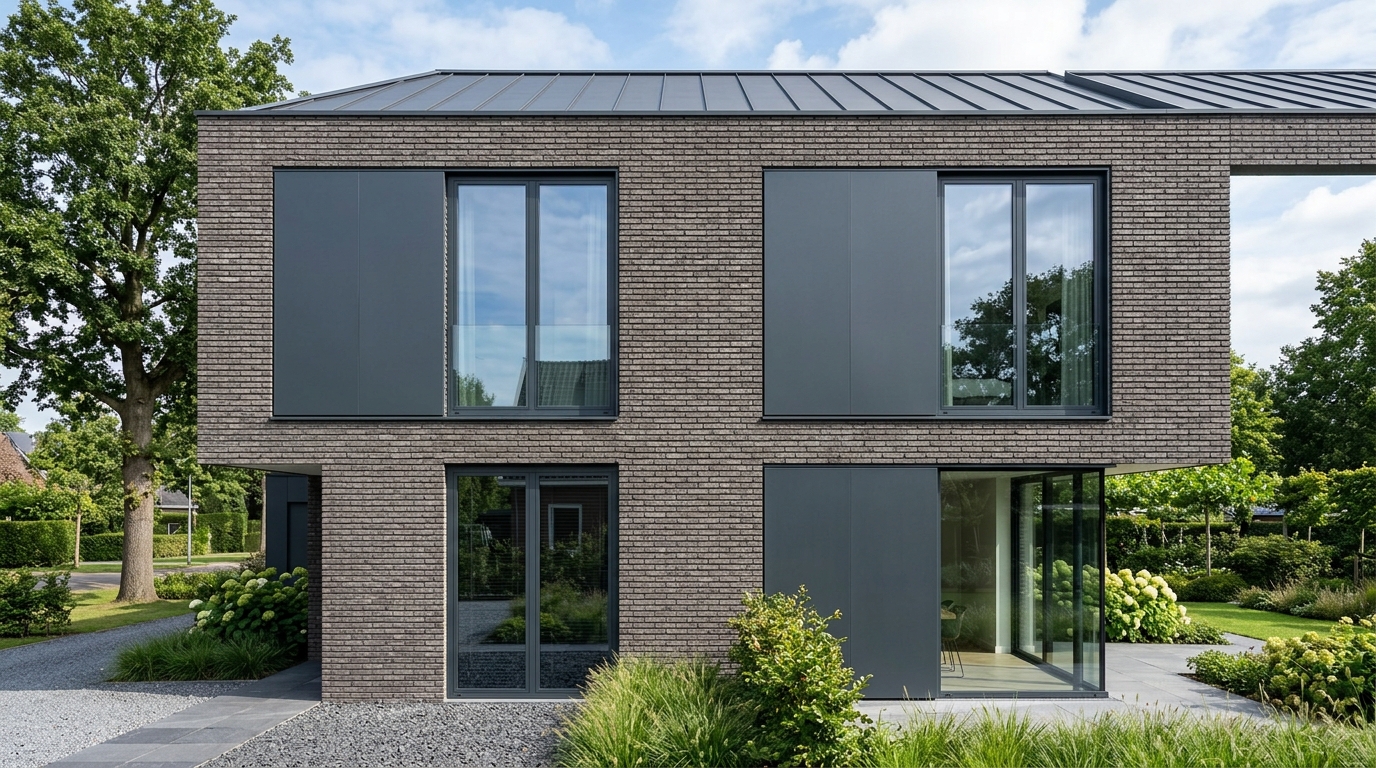
Compare wooden, aluminium or UPVC panel shutters
At Shutters Inc, you can choose the material for each type of panel that best suits your desired look and maintenance requirements:
| Features | Wooden panel shutters | Aluminium panel shutters | Upvc panel shutters |
|---|---|---|---|
| Style & level of detail | Deepest profiling, genuine bossed panels and authentic wood joints | Extremely sleek and dimensionally stable, available with flat panels and classic mouldings | A neat, even finish, also available with wood-grain film |
| Maintenance | Regular cleaning and repainting (maintenance guide) | Virtually maintenance-free thanks to a durable powder coating | Maintenance-free; no more sanding or painting |
| Thermal & dimensional stability | Naturally insulated; high-quality, durable outdoor timber | Not affected by damp or sunlight; extremely lightweight and colourfast (more about aluminium) | Moisture-resistant and dimensionally stable (more about upvc) |
| Suitable for listed buildings? | Yes — 1-to-1 historical bespoke work available | Often used in modern renovations and new-builds in the countryside | Suitable for renovation and new-build projects not subject to heritage restrictions |
| Installation options | Hinged, fixed decorative or sliding shutters | Hinged, fixed decorative or large-format sliding shutters | Hinged or fixed, decorative and made to measure |
Points to consider when taking measurements, wall insulation and shutter fittings
As panel shutters have a solid surface, they are subjected to greater wind pressure than open louvre shutters in strong winds. Well-chosen and securely fixed shutter fittings are therefore essential:
- Sturdy shutter locks when open: Ensure that open panel shutters are always securely locked in place with robust shutter locks (such as a spring-loaded latch or storm hook), so that strong gusts of wind can never slam the shutter against the glass.
- The right balance between panel sections: For windows taller than 140 cm, dividing the window into two or three panel sections (with crossbars that run the full height of the window frame or sash) creates a harmonious overall look. Read our practical tips on measuring and fitting window shutters.
- New-build properties with thick insulated walls: Are the panel shutters to be fitted to an insulated cavity wall or external wall insulation (ETICS)? In that case, we use thermal bridge-free spacer mounting systems (see details under ‘External shutters for new-build properties and external wall insulation’).
Are you still undecided between panel shutters, louvre shutters or combination shutters? Compare the two styles – louvre and panel shutters – view current guide prices to find out how much shutters cost, or request a no-obligation consultation and a measurement appointment straight away via our quotation form.
Frequently asked questions
What is the difference between a moulded panel and a flat panel shutter?
A bevelled panel features sloping edges with a raised central section, creating a classic sense of depth for townhouses, vicarages and listed buildings. A flat panel shutter has a smooth, sleek inner panel that complements modern architecture perfectly.
Do panel shutters completely block out the light in the bedroom?
Yes. As panel shutters are completely solid with no slat openings, functional panel shutters offer the highest level of light blocking, privacy and thermal insulation of all external shutters.
Can I combine panel shutters with interior shutters or curtains?
Absolutely. External panel shutters block out summer heat and cold winds before they reach the glass, and can be easily combined with net curtains, drapes or traditional internal shutters.
Which material is best for panel shutters on a south- or west-facing façade?
On façades exposed to plenty of sun and rain, many homeowners opt for powder-coated aluminium or UPVC panel shutters due to their low maintenance and excellent dimensional stability. If you choose wood, well-ventilated hardwood with a high-quality finish will also last for decades.
Are panel shutters also available as sliding shutters?
Yes. Sleek, flat aluminium and wooden panel shutters in particular are often used as sliding shutters on a façade rail alongside large windows or sliding doors.